
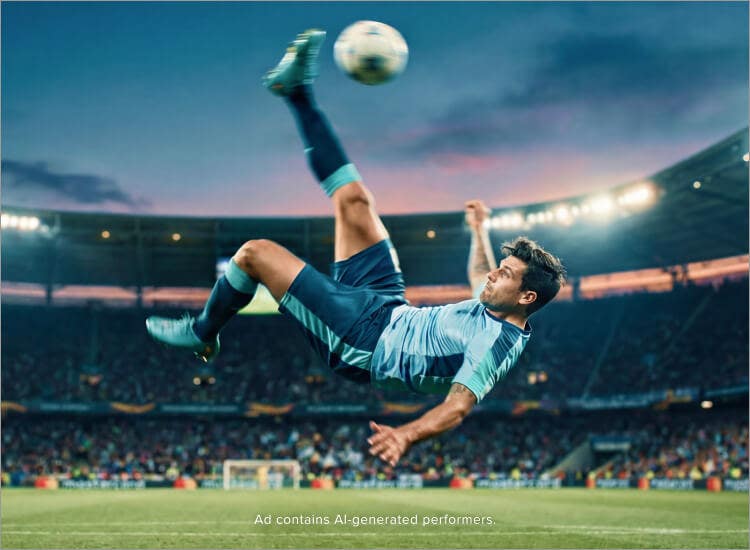
FIFA World Cup 2026™: Quarterfinals Schedule & Preview
Just 8 teams remain in the FIFA World Cup 2026™. Here’s a closer look at each of them, the quarterfinals schedule, and how to watch live on FOX with Sling TV.
There are just three rounds remaining in the FIFA World Cup 2026™ and from here on out, teams every pass, every shot, and every goal carries extra weight. The Round of 16 saw all three host nations sent home, along with other premiere teams like Portugal and Brazil. The remaining teams are vying for the glory while flirting with heartbreak, as they attempt to move on the tournament’s penultimate round.
We’ll update the full schedule as more matchups are confirmed. In the meantime, here’s an early look at the quarterfinals schedule and how to watch FIFA World Cup 2026™ on FOX and FS1 with Sling.
How to Watch the FIFA World Cup 2026™ on FOX with Sling
https://youtu.be/IjIobmU3QQ4?si=eiHXq5yXKDN9kalg
English-language coverage of the remaining matches at the FIFA World Cup 2026™ will be exclusive to FOX. Here are the Sling services with FOX available in select markets:
- Sling Select (Best Value)
- Sling Blue (More Variety)
- Sling Orange + Blue (Most Channels)
Use your Sling credentials to sign in to the FOX One app and watch the FOX channels included in your Sling subscription. Packages include Sling Select, Sling Blue, Sling Orange & Blue, and Sling Essentials & Select.
FOX is also available to stream directly on Sling for subscribers in the markets listed below:

If you live in one of these markets, you can watch every game of the FIFA World Cup 2026™ with a subscription to Sling Select, Sling Blue, or Sling Orange + Blue. Click the link below to subscribe to Sling Select, and follow this link for complete details on how to watch FIFA World Cup 2026™ on FOX and FS1 with Sling!
Can You Watch the FIFA World Cup 2026™ With Sling Day Passes?
No. FOX and FS1 are available with a subscription to Sling Blue or Essentials. 1, 3, and 7 Day Passes only offer programming in the Sling Orange package.
FIFA World Cup 2026™ Quarterfinals Schedule
https://youtu.be/9kb39__I-qY?si=55Pp0CVdrB9XLW5o
The first of the four quarterfinal matches kicks off on Thursday, July 9 at 4:00 PM ET, and continues through Saturday, July 11. Here’s the full schedule, including matches that are still TBD. All remaining FIFA World Cup 2026™ matches air live on FOX:
Thursday, July 9 – 4:00 PM ET – France vs. Morocco from Boston
Friday, July 10 – 3:00 PM ET – Spain vs. Belgium from Los Angeles
Saturday, July 11 – 5:00 PM ET – Norway vs. England from Miami
Saturday, July 11 – 9:00 PM ET – Argentina vs. Switzerland from Kansas City
FIFA World Cup 2026™ Quarterfinals Previews
France vs. Morocco: Transitional Royalty meets the Possession Revolution
https://youtu.be/7lzFK_oFk_Q?si=8Xn2p8DB1p996XDX
France arrives in the last eight wielding terrifying, cold-blooded authority. Didier Deschamps has engineered a relentless attacking juggernaut that has already hammered home 14 goals over the course of five matches. At the tip of the spear is Kylian Mbappé, who currently co-leads the Golden Boot race with an electric 7 goals in 5 appearances. When given open space, the French transition game is purely devastating. Mbappé is flanked by premium world-class weapons like Ousmane Dembélé, Bradley Barcola, and Michael Olise, the tournament's premier creative fulcrum who commands a tournament-high five assists from the No. 10 slot. Centrally, Deschamps has built a fortress anchored by the imposing, settled center-back pairing of William Saliba and Dayot Upamecano. Their physical maturity was on full display during a tight, mature 1-0 triumph over an incredibly stubborn Paraguay side. Backed by absurd bench depth featuring game-changers like Désiré Doué, France possesses the physical engine to sustain a ferocious tempo over a full 90 minutes.
Yet, Les Bleus harbors a distinct, highly exploitable structural flaw: an incredibly passive defensive block. France routinely drops deep and surrenders massive swathes of territory to their opponents, ranking a surprising 20th in progressive passes allowed, 26th in passes allowed per defensive action, and 29th in progressive carries allowed. If they exhibit the same early-match sloppiness that plagued them against Sweden and Paraguay, they will be punished.
Morocco is perfectly configured to crack this passive setup wide open. Under Mohamed Ouahbi, the reigning AFCON champions have completely shed their old skin, transforming from the low-block, defend-and-counter outfit of 2022 into a highly sophisticated possession machine. They put on an absolute clinic in the Round of 32, stringing together a mind-boggling 801 passes to completely dictate the tempo against the Netherlands. Their starting eleven is beautifully balanced; world-class captain Achraf Hakimi provides tireless, overlapping width down the right wing, while midfield sensation Ismael Saibari—who just locked up a blockbuster transfer to Bayern Munich after scoring in all three group matches—acts as a physically dominant and technical engine room alongside Bilal El Khannouss and veteran Sofyan Amrabat. Defensively, their compact block is exceptionally organized, allowing just a single goal across their last five competitive outings.
Morocco’s primary Achilles' heel, however, is a glaring lack of squad depth. The Atlas Lions are an absolute buzzsaw for the first hour of play, logging a spectacular plus-2.4 expected goals differential. But as the match enters the final 30 minutes and substitutions roll in, their performance levels drop off a cliff, forcing them to survive on pure grit. Against a French side that can inject fresh, elite legs like Barcola and Doué late, any fatigue in the Moroccan lines will be punished mercilessly by the speed of Mbappé and Dembélé. If Morocco can isolate Mbappé, choke out the service, and execute their fluid counter-attacks, they can secure a historic upset and avenge their painful 2022 semi-final defeat. If not, France's overwhelming individual quality and superior 90-minute endurance will ultimately breach the wall.
Spain vs. Belgium: Surgical Possession meets Veteran Defiance
https://youtu.be/SByL0YoeGmw?si=LxFeHyykFKNpcjkU
Spain enters this clash looking to assert absolute midfield dominance. Luis de la Fuente has constructed a spectacular tactical system constructed around an unyielding stranglehold on possession, utilizing surgical passing to starve opponents of oxygen before they can ever establish a rhythm. This tactical engine is driven by Rodri, the undisputed premier defensive midfielder on the planet, flanked by the brilliant creativity of Pedri and Dani Olmo.
Defensively, La Roja has been immaculate, stringing together three consecutive clean sheets during the group phase, with 19-year-old center back Pau Cubarsí playing with a level of composure and maturity that defies his age. In wide areas, Spain can stretch any backline to its breaking point through the explosive, one-v-one dribbling wizardry of Lamine Yamal and Nico Williams, allowing them to transition seamlessly from stolid possession into lightning-fast vertical strikes.
However, Spain has struggled with a persistent lack of clinical finishing in the final third, occasionally looking passive and failing to convert high possession metrics into hard goals. Compounding the issue are fitness concerns out wide; Williams has been hampered by injuries, while Yamal enters the knockout phase looking a half-step behind his world-class best.
This attacking stagnation plays directly into the hands of a reborn Belgium squad. Under Rudi Garcia, the Red Devils have navigated a massive roster transition, shedding the heavy psychological weight of their past Golden Generation to play with the ultimate freedom of low expectations. Against the United States, Garcia made the incredibly bold, galaxy-brain decision to bench superstar creators Kevin De Bruyne and Jérémy Doku, a tactical masterstroke that immediately galvanized the squad and unlocked a highly efficient system spearheaded by Leandro Trossard and Youri Tielemans. Tielemans has been in amazing form, controlling distribution and calmly slotting the high-pressure penalty that sank Senegal in the Round of 32. Up front, Romelu Lukaku remains an intensely physical, dominant center-forward; all three of his goals have come off the bench, cementing his place among the greatest goalscorers in World Cup history.
Belgium’s distinct tactical advantage lies in how Garcia deploys his weapons. By holding De Bruyne and a fully rested Doku back as elite impact substitutes, Belgium can alter the geometry of a match the second an opponent's legs grow heavy. With Thibaut Courtois providing a legendary, commanding presence between the posts, Belgium is fully equipped to absorb Spain's stolid possession. In transition, Doku's frightening acceleration and Lukaku's elite hold-up play can punish Spain's high defensive line if their midfield can successfully knock Rodri off his rhythm.
The big warning sign for Belgium is their slow, aging central defense. The center-back pairing of Arthur Theate and Brandon Mechele lacks recovery speed and has looked highly vulnerable against fluid movement, conceding four goals in the early stages and looking completely exhausted after a grueling 120-minute war with Senegal. If Spain maintains their intense off-the-ball work rate and clinical passing, the dizzying movement of Yamal and Olmo will easily drag Mechele and Theate out of position, allowing La Roja to wear the Red Devils down for a controlled, commanding victory.
England vs. Norway: Pragmatic Order vs. Vertically Explosive Volatility
https://youtu.be/Fr_7gvsSC-g?si=aFaNAdOse2gF7kXC
England rolls into the quarterfinals boasting outstanding defensive stability, immense individual star power, and a deep, relentless roster. Under Thomas Tuchel, the Three Lions have prioritized structural discipline and defensive organization, earning the tournament's third-best expected goals conceded rating. This airtight foundation is anchored by the reliable center-back partnership of John Stones and Marc Guéhi, a duo that rarely grants opponents clean looks at goal. In the middle of the park, Declan Rice provides massive physical dominance and tireless coverage, giving Jude Bellingham the total creative freedom to dictate matches. Bellingham has operated as the undisputed engine of the side, turning in a legendary, box-to-box masterclass highlighted by a spectacular brace to conquer co-hosts Mexico. Up front, captain Harry Kane remains the ultimate clutch finisher, leading the line with six goals in five games. Furthermore, England is a certified nightmare on set pieces, generating a tournament-high six dangerous set-piece shots per game. Having already survived a fiercely hostile atmosphere and a red card in Mexico City, this group has proven it possesses the mental toughness of a true championship favorite.
The vulnerability for England lies in a persistent, labor-intensive struggle with offensive creativity. Tuchel’s heavy preference for pragmatic order over flair led him to leave several unpredictable playmakers out of the squad entirely, leaving England prone to stagnant build-up play and low progressive passing metrics when trying to break down compact blocks. Compounding their issues, injuries to fullbacks Reece James and Djed Spence have severely stripped away their natural defensive width.
Norway is a team meticulously designed to exploit those exact creative deficiencies. Ståle Solbakken’s side cares absolutely nothing about winning the possession battle; they are completely content to sit in a tight, disciplined block, stall England’s slow possession, and wait for the inevitable mistake. The moment an English attack dies, Norway unleashes a vertically explosive transition system built around generational x-factor talents. Midfield maestro Martin Ødegaard possesses the world-class vision and spatial awareness to completely bypass Declan Rice, carving open backlines with pinpoint distribution. His primary target is Erling Haaland, a towering, physically dominant goal machine who currently co-leads the Golden Boot race with seven goals. Haaland requires only a fraction of an inch to completely alter a match, as evidenced by his stunning brace to single-handedly eliminate five-time champions Brazil.
Norway's direct, vertical attack is boosted by exceptional physical endurance and rapid, direct wide threats like Antonio Nusa and Alexander Sørloth who create constant overloads in the final third. Crucially, having intentionally rested their primary stars during the group stage finale against France, Norway enters this quarterfinal match fresh and highly motivated.
The major flaw for the Nordic side is severe defensive fragility. Solbakken's wide-open, high-risk system leaves the backline routinely exposed in transition, ranking a dismal 35th in shots allowed per possession during the group stage, a weakness laid bare in their 4-1 shellacking by France. Norway’s defense simply cannot cope with elite, sustained pressure over 90 grueling minutes. If Rice can choke out Ødegaard's passing lanes and limit Haaland's service, the relentless box-to-box engine of Bellingham and the ruthless execution of Kane will dissect Norway's fragile lines. England's superior tactical maturity and unmatched squad depth give them a massive late-game advantage that could break the Scandinavian defense.
Argentina vs. Switzerland: Talismanic Majesty vs. Midfield Locks
https://youtu.be/YgjgBw6MKxo?si=1MupK4neUspy98Ul
Argentina arrives at this stage riding the golden, age-defying wave of Lionel Messi. The iconic talisman is putting together a tournament for the ages, single-handedly driving the attack and leading the Golden Boot race with eight goals after finding the back of the net in every single match. Under manager Lionel Scaloni, the Albiceleste possess the rarest asset: true championship pedigree. This is a group with immense foundational chemistry, bringing back over sixty percent of their 2022 title-winning roster to defend the crown.
When things get chaotic, Scaloni relies on hard-working, elite defensive and transition cogs like Lisandro Martínez and Enzo Fernández to orchestrate swift attacks. They supply the stability that allows their frontline to shine. More than anything, this Argentine squad possesses a resilient, street-smart character. They don't mind getting their hands dirty, proving time and again that they have the rare capacity to win incredibly ugly matches when under heavy pressure that would break lesser teams.
Switzerland counters this star-studded flair with superb tactical organization, physical defensive discipline, and stellar underlying metrics. The Swiss are a data-driven dream in North America, quietly generating the fourth-most expected goals (xG) in the tournament while surrendering the third-lowest to their opponents. That clinical efficiency makes them an exceptionally tough nut to crack. The heartbeat of their system lies in the central midfield double-pivot of captain Granit Xhaka and Remo Freuler, two tournament-hardened veterans who excel at dictating game tempos and completely denying space to elite playmakers.
Should an attack manage to break through the lines, Switzerland boasts a highly disciplined central defender in Manuel Akanji, who ensures the backline rarely makes errors or gives away dangerous set pieces. And behind them stands Gregor Kobel, who is putting together a spectacular, tournament-defining campaign between the posts. Kobel has already saved three goals above expected and has completely dominated penalty shootouts, giving the Swiss a massive psychological security blanket if the match goes the distance.
Despite their pedigree, the world champions harbor a distinct, highly exploitable vulnerability: extreme tactical dependency on their captain. Argentina’s reliance on Messi is statistically jarring, with the superstar accounting for eight of the team’s thirteen total goals, leaving the rest of the forward line underperforming. To make matters worse, the Argentine defense has started to leak goals, conceding four times across their last two grueling knockout matches. Stats suggest their passive transition defense and poor aerial duel success rate leave them vulnerable to well-organized attacks.
Switzerland is structurally built to exploit these exact cracks. If Xhaka and Freuler can successfully choke out the central passing lanes feeding Messi, the Swiss collective shape can frustrate the champions, force turnovers, and sting them on quick vertical transitions.
However, the Swiss face their own alpine climb. Switzerland's primary weakness is a toothless attack that frequently lacks a clinical killer instinct in the box. This deficiency is severely compounded by a devastating knee injury to breakout young midfield star Johan Manzambi, robbing Yakin's squad of their most creative outlet. The resilient Swiss side has also historically struggled when the pressure reaches an absolute boiling point, occasionally exhibiting defensive passivity late in matches.
That late-game passivity plays right into the hands of Scaloni's squad, who specialize in winning ugly, gritty games. Even against a rigid, compact Swiss block, Messi requires only a single fraction of a second to exert his unmatched individual genius, punish a momentary lapse, and march the world champions into the semifinals.
Key Dates
After the relentless schedule of the Group Stage and first two knockout rounds, the remaining matches are largely broken up with off days. Here’s a look at the dates to mark on your calendar; follow this link for more information on World Cup venues:
- July 9-11: Quarterfinals
- July 14-15: Semifinals
- July 18: Bronze Final
- July 19 - Final