'Midsommar' Explained and Where to Watch with Sling
Ari Aster’s 2019 folk horror classic is a difficult but richly rewarding film. Here’s how to watch it with Sling.
Some horror movies frighten you in the moment, but the best ones haunt you long after the credits roll. Midsommar – the 2019 Ari Aster folk horror film that followed his breakthrough debut Hereditary – is a textbook example of the latter. While there are certainly horrific moments that will make you wince, Midsommar is more notable for its complex themes and unforgettable ending than specific scares. Here’s a closer look at what makes Midsommar such an eerie (and divisive) film, and of course, how to watch it for yourself with Sling.
Where To Watch ‘Midsommar’
https://youtu.be/1Vnghdsjmd0?si=i9ScF1Eob5hveWtw
Midsommar was distributed by independent film juggernaut A24, the studio behind arthouse features like Best Picture winners Moonlight and Everything Everywhere All at Once, as well as “elevated” horror films like Hereditary, Talk To Me, and Heretic. A24 films stream on HBO and HBO Max. To watch Midsommar with Sling, use the link below to add HBO to your Sling subscription.
‘Midsommar’ Explained
SPOILERS follow
On Rotten Tomatoes, there’s a 20 point chasm between Midsommar’s critic’s score (83 percent) and audience score (63 percent). That should give you an idea of the divided response to the film, but we’d suggest there are two specific reasons why Midsommar is so polarizing.
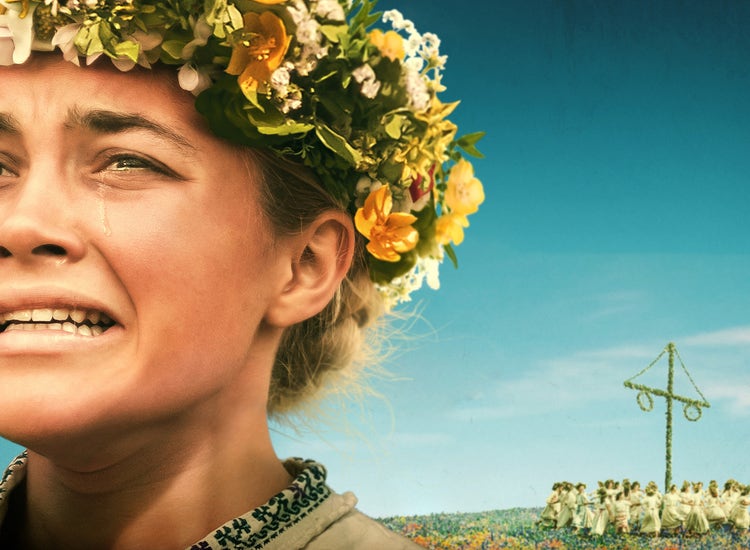
First, it’s an unflinching examination of the toll of trauma and grief. In her breakout performance, Francis Pugh plays Dani, a young woman who – following the film’s riveting and brutal opening sequence – is left mourning the loss of her parents and sister. As such, she’s asked to do a lot of crying (it’s even there in the movie poster). More accurately, she does a lot of different types of crying, from the guttural wailing that follows a loved one’s death, to the hyperventilating gasps of heartbreak, and even the suppressed whimpers that come when you’re fighting back tears. It’s painful enough to comfort our loved ones in these moments; for some audiences, it might be asking too much.
The bizarre rituals of the midsummer ceremony are another alienating aspect of the film. Although based in historical tradition, the ättestupa ceremony with the village elders is tough to watch, and the final ritual (which covers the last 45 minutes of the film), is nearly as disorienting for the audience as it is for the characters going through it. Now four films into his career, it’s clear that Aster is fascinated by social traditions and norms, as well as surrealism as a storytelling device. And while the anthropology majors who appear in Midsommar might find this fascinating enough to turn into their thesis, Aster’s style as a filmmaker feels increasingly comperable to David Lynch: unmistakably distinct, wholly original, and clearly not for everyone.
So what is Midsommar about? While it’s difficult to distill its tone and themes into a one sentence summary, we’ll give it a shot: the acceptance of death as the ultimate pathway to healing. As one of the villagers explains to the horrified American tourists who just watched two people plummet to their deaths, “Instead of getting old and dying in pain and fear and shame, we give our life as a gesture.” Still shaken by her sister’s suicide, Dani can’t process this idea…until she’s betrayed by her boyfriend and is granted the power to decide his fate. As she watches his sacrificial temple burn to the ground – in a ritual that will purge the commune of evil – the arresting final shot presents an image we’ve been waiting the entire movie to see: Dani is finally smiling.
What Are Some Movies Like ‘Midsommar’?
https://youtu.be/a-tDnavDCwI?si=qoa0E-xXttDWZpHH
Midsommar falls squarely into the “folk horror” subgenre, which was popularized in 1973’s The Wicker Man (you can skip the Nicholas Cage remake). Ari Aster is also closely associated with other so-called “elevated” horror directors like Robert Eggers, whose astonishing debut The Witch also explores the intersection of religious ritual and horror, albeit in the setting of colonial America. Other examples of critically-acclaimed folk horror films include 2013’s A Field in England, 1971’s Blood on Satan’s Claw, and 2011’s Kill List, which one writer characterized as “some of the most evil and upsetting filmmaking ever put to screen.”
We have one more suggestion for those who identified with Midsommar’s doomed romance plot: 2010’s Blue Valentine starring Ryan Gosling and Michelle Williams. While this may seem like somewhat of a left-field recommendation, its intimate examination of a dysfunctional relationship is every bit as brutal as any horror film you’ll watch this Halloween.